
The Sea as Providence
The Man Who LaughsThe novel uses the sea’s violence and the survival of a small flask to question how fate and providence work through material events.
increasing Bearing strength in each event
 decreasing
Bearing strength in each eventdecreasingThe Sea’s Double Face
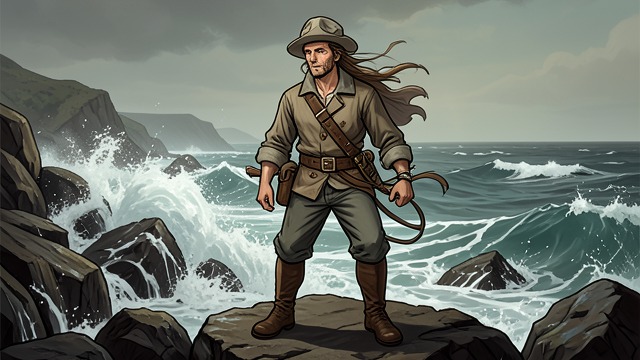
The Sea’s Double Face
Force without explanation
The Matutina meets snow, wind, reefs, and violent currents.
The sailors experience nature as both adversary and accidental helper.
Human plans repeatedly lose authority at sea.
Fate made visible
The doctor treats natural events as signs of a wider order.
The storm’s turns offer neither a stable moral pattern nor certainty.
The sea becomes the novel’s image of unknowable fate.
Repentance in the Wreck
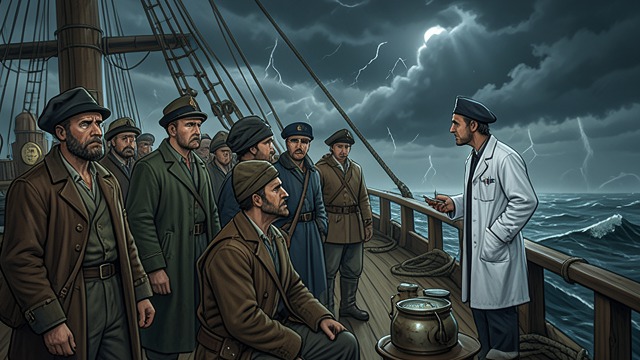
Repentance in the Wreck
Crime acknowledged
The fugitives recognize that they abandoned and endangered a child.
They confess their actions before the ship founders.
Their repentance arrives too late to save their bodies.
A message entrusted
They place the confession in a flask and cast it into the sea.
The act gives the sea a role in carrying moral testimony.
The unknown receives what ordinary justice has not yet seen.
The Flask Preserved
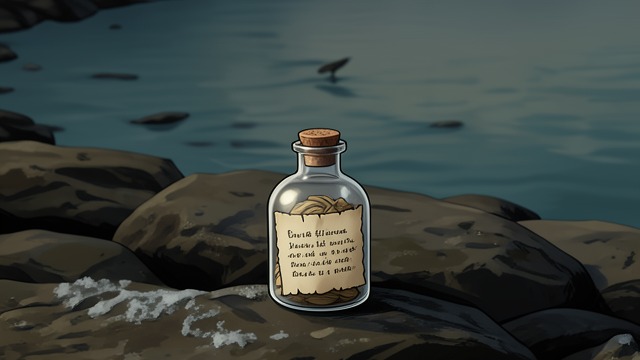
The Flask Preserved
Survival against probability
The flask keeps its parchment through years of movement in the sea.
Its fragile material escapes damage from waves, rocks, and time.
The unlikely survival encourages a providential reading of chance.
Meaning arrives late
Gwynplaine grows up without knowing the evidence exists.
The message reaches land only when he is an adult.
Its delay makes fate appear patient rather than immediate.
A Good Deed Misused
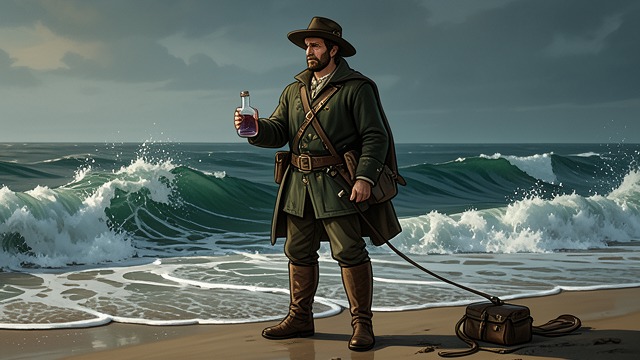
A Good Deed Misused
The truth recovered
The bottle restores Gwynplaine’s identity and inheritance.
The sea’s preservation repairs a royal attempt to erase him.
A long-hidden crime receives an official answer.
Providence serves malice too
Barkilphedro uses the discovery to advance his revenge and influence.
Justice becomes entangled with an envious courtier’s purpose.
The same event can repair one wrong while causing new suffering.
No Final Deliverance
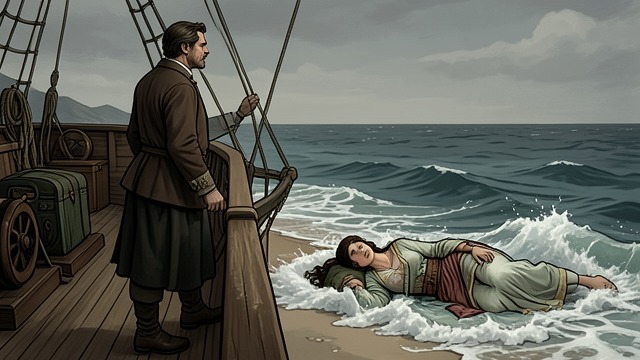
No Final Deliverance
Reunion at sea
The ship brings Gwynplaine back to Dea and Ursus.
The return seems to answer the earlier message’s long journey.
For a brief interval, the separated family is reunited.
The sea keeps its mystery
Dea dies, and Gwynplaine enters the water after her.
The vessel continues onward without him.
Providence remains a question, not a simple promise of earthly rescue.
During the Matutina’s passage through the Channel
In the final minutes before the Matutina sinks
Over the fifteen years following the 1690 wreck
When Barkilphedro opens the flask in 1705
As the Vograat reaches the sea
